Asian Food & Wine
Loving the Label, or the Hand
A group of wine enthusiasts in Singapore gathered to taste Burgundy's most romantic vineyard; but with the labels off, over a Wenzhou seafood feast. Reading beyond the label means understanding the hand that makes it.
15 July 2026
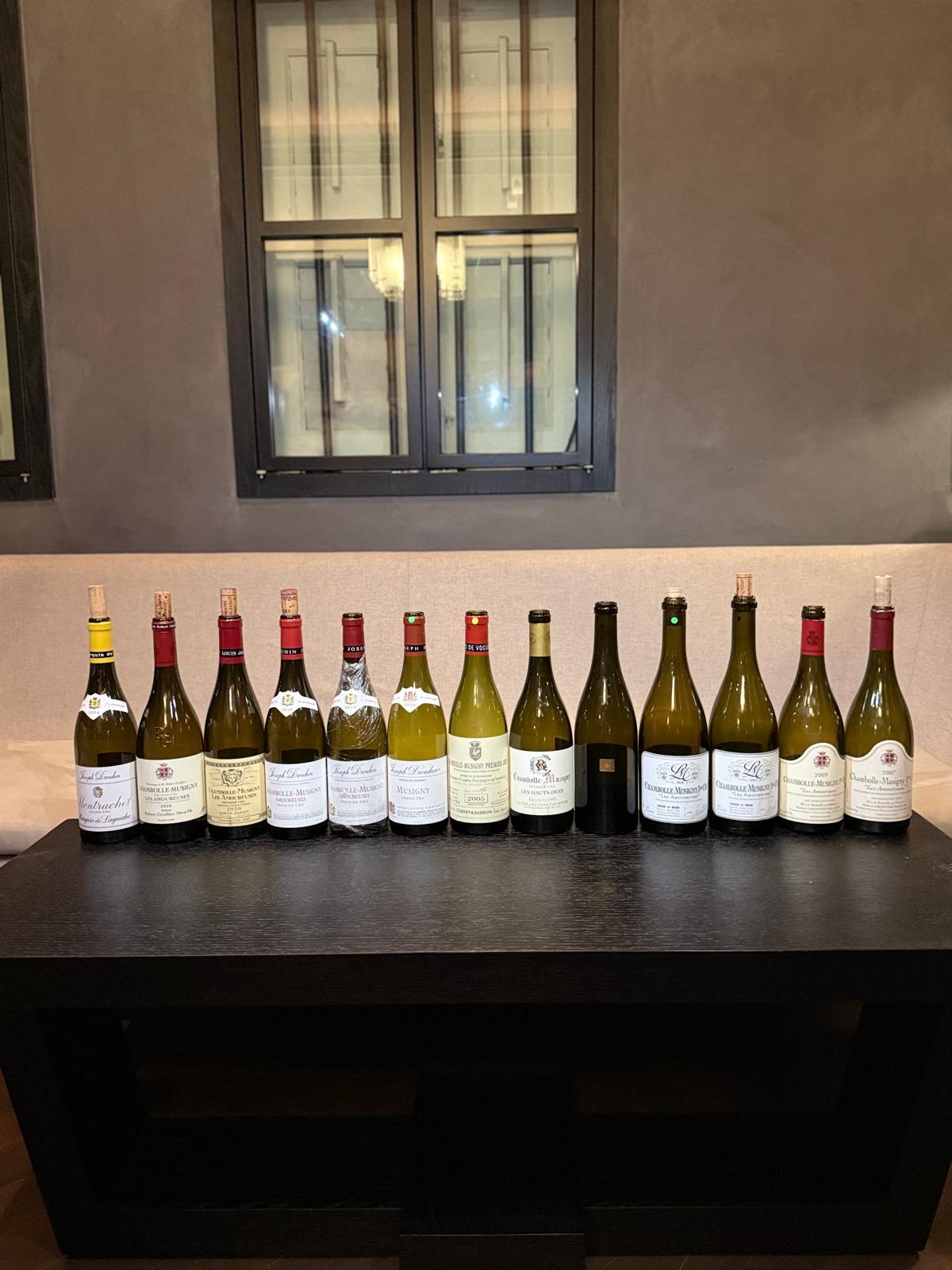
A line-up of wines tasted at Wenzhou Mansion, Singapore. (Photo Credit: Leng Hoe Lon)
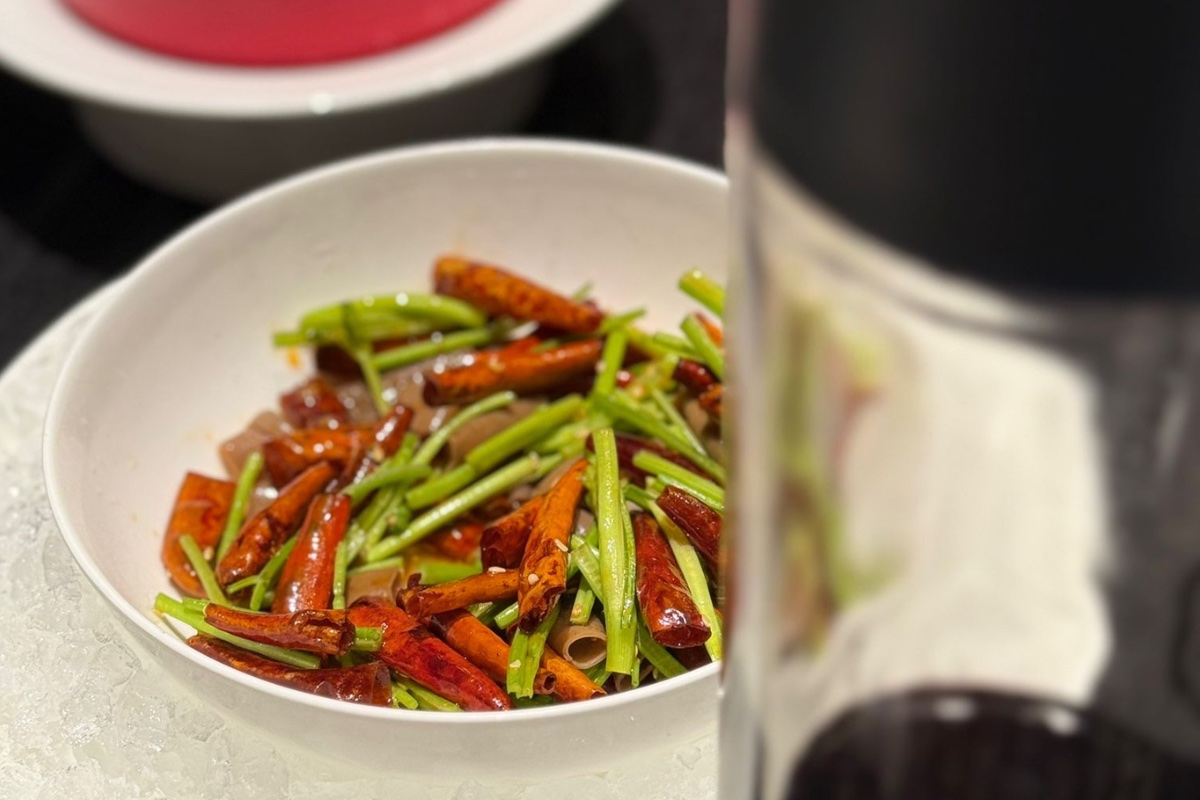
On a July evening in Singapore, thirteen bottles stood in a row in a private room at Wenzhou Mansion. Twelve reds and one white, and behind most of the reds sat a single vineyard name: Les Amoureuses, 爱侣园, "the lovers," the great premier cru of Chambolle-Musigny (香波-慕西尼). Around the table sat friends who love this wine, but not one could see a label. Every glass was poured blind, and the food kept coming: cold marinated sea intestine, steamed mud crab and garlic-braised wild soft-shell turtle.
Perhaps the real subject wasn't Les Amoureuses. It was a simple argument the table kept proving without meaning to flight after flight: the hand outargues the label.
Les Amoureuses is worth setting up for the reader who hasn't chased it: the most celebrated of Chambolle-Musigny's premier crus, a grand cru in all but legal rank. It is a vineyard chased by its own name rather than the producers's, and priced, at its finest, above the grand crus it sits beneath. This is exactly the sort of label bought on faith and rarely tested in the dark — until that night.
One plot, one year, three hands.
Three 2020 Les Amoureuses, from Maison Joseph Drouhin, Domaine Robert Groffier Père & Fils and Maison Louis Jadot. Same vineyard, same vintage, and only the winemaker changed. The table's blind favourite was unanimous: the Drouhin, the large maison many collectors quietly rank below the domaines. One guest who had visited the Drouhin cellar came away struck by how meticulous and restless the winemaking was, and blind, that care showed. The disappointment, once revealed, was the Groffier, the family whose name is practically a synonym for Les Amoureuses. Young Groffier is built to be buried for a decade, not to charm a table at first pour. It did not fail — it was simply not ready to perform.
The maison takes first and second.
One guest brought a deliberate pair, both 2005: a Joseph Drouhin Musigny Grand Cru and a Domaine Comte Georges de Vogüé Chambolle-Musigny, pedigree against pedigree. The Drouhin Musigny won the flight blind and would be named wine of the night; second place went to yet another Drouhin, the Les Amoureuses 2010. The maison took first and second while the celebrated growers looked on. The Musigny's perfume was the reason: pinpoint and precise, 麝香, deer musk, the dark animal scent prized alike in fine fragrance and in Chinese medicine.
The de Vogüé, flagged by the table as the "non-theme," was correctly spotted: its straight Chambolle premier cru is not Les Amoureuses at all but declassified young-vine fruit the domaine calls "Baby Musigny," closed and backward, simply what that house made in that era. The last glass, a 1995 Robert Groffier Les Hauts Doix, was correctly named the oldest wine present — stern and foresty, softening into 中药, the dried-herb, bittersweet-root smell of Chinese medicine a cool 1995 grows into with age.
Two flights in, the pattern was already the argument: the two most famous names at the table were doing the least to prove it.
One Domaine, Different Hands.
Two Robert Groffier Les Amoureuses, 2007 and 2009. The blind favourite, correctly read as the older wine, was the 2007, and by consensus it was the finest Les Amoureuses of the night. The two collectors who brought the bottles were convinced they couldn't have come from the same cellar, and there is real ground for that instinct: the wines carry a name that has outlived three generations, Robert, then Serge, then Nicolas since 2006, who reshaped the style slowly, more whole-bunch, less new oak. The 2007 tasted more old-school Serge; the 2009 sat on the hinge of Nicolas's shift, a cool, lean vintage against a warm, ripe one. Every reason to taste like strangers.
One taster put it plainly: Domaine Robert Groffier needs a bit of learning, in terms of vintage differences. Same vineyard, same family name, two different wines.
The gate-crasher.
Then, one glass didn't belong at all. Three wines, one not from Burgundy. Two were Lucien Le Moine Les Amoureuses, 2018 and 2011, "very expressive." The third, unanimously the wine that "surprised most," was a Bass Phillip Reserve Pinot Noir 2022 from Gippsland, Victoria — minty, whole-cluster, tightly wound, "takes time to grow." Nobody would have bought it that night, but everybody noticed it.